
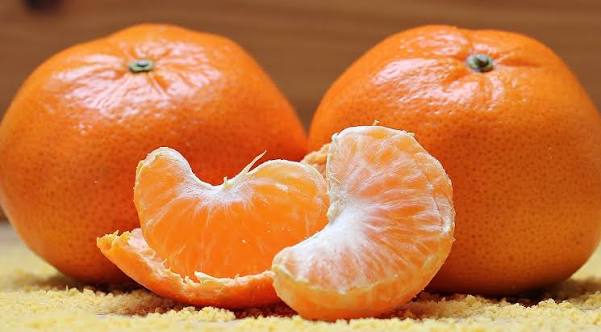
The orange is a sweet, juicy citrus fruit produced by an evergreen tree (Citrus × sinensis) in the Rutaceae family. Highly regarded as a global dietary staple, it is technically a hybrid anciently engineered by crossing a pomelo with a mandarin orange. [1, 2, 3]
Key Characteristics & Botanical Profile
- The Fruit Type: Botanically, an orange is a modified berry known as a hesperidium. It features a leathery, oily outer rind (peel) covering a segmented, juicy pulp divided into sections called carpels. [1, 2]
- Origin & History: The fruit originated thousands of years ago in a region encompassing Southern China, Northeast India, and Myanmar. Fun fact: The fruit was named first; the word for the color “orange” actually derives from the ancient Sanskrit word nāraṅga (meaning fragrant). [1, 2]
- Growth Cycle: Orange trees thrive in tropical and subtropical climates. They bear heavily fragrant, five-petaled white blossoms before producing small green fruits that slowly ripen into a bright orange hue. Unlike some fruits, oranges do not continue to ripen after being picked. [1, 2, 3, 4]
Popular Varieties
The citrus family boasts hundreds of cultivars, broadly categorised into distinct types: [1, 2]
| Variety | Best Used For | Key Distinctions |
|---|---|---|
| Navel Oranges | Fresh Eating | Seedless, exceptionally sweet, and very easy to peel. |
| Valencia Oranges | Juicing | Thin-skinned, highly juicy, with a sharp, balanced flavor profile. |
| Blood Oranges | Cocktails & Desserts | Striking crimson pulp containing anthocyanins; yields a raspberry-like undertone. |
| Mandarins & Tangerines | Snacking | Smaller, notably flattened cousins that are loose-skinned and highly sweet. |
To see exactly how these fruits go from an orchard seed to a fully grown, bearing tree, you can explore the entire journey: