
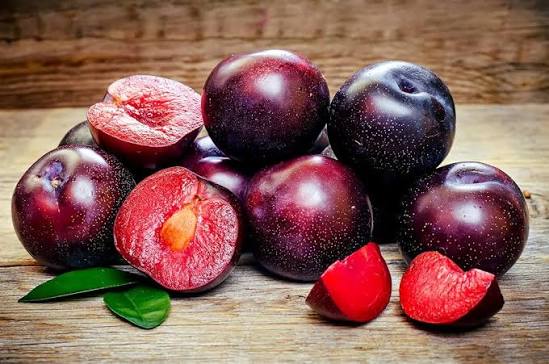
The plum is a diverse, smooth-skinned summer stone fruit produced by various deciduous trees in the genus Prunus, belonging to the Rosaceae (rose) family. Celebrated for its high moisture content and complex sweet-tart balance, the plum is one of the most widely adapted and globally cultivated fruit groups.
Key Characteristics & Botanical Profile
- The Fruit Type: Botanically, a plum is a drupe. It features a smooth, waxy outer skin (epicarp) that often carries a natural powdery silver-white coating called a “wax bloom,” which protects the fruit. The juicy flesh surrounds a single, flattened hard pit.
- Origin & History: Plums have multiple ancestral homes. European plums (Prunus domestica) originated near the Caspian Sea and were heavily cultivated by the Romans. Japanese plums (Prunus salicina) actually originated in China but were perfected and popularized in Japan before spreading worldwide.
- Prunes vs. Plums: All prunes are plums, but not all plums can be prunes. A prune is simply any variety of plum—most notably the European French Prune—that has been dried. These specific varieties are bred for high sugar content and solids, allowing them to pit and dry naturally without fermenting around the stone.
- Growth Cycle: Plum trees are incredibly resilient and can handle a wide variety of soil conditions. They burst into dense clusters of white or pink blossoms in early spring, requiring chilling hours during winter to break dormancy and successfully set fruit.
Popular Varieties & Cultivars
Plums offer immense variety in skin colors (ranging from yellow, green, and red to deep purple) and flesh types:
| Type / Variety | Flavor Profile | Key Distinctions |
|---|---|---|
| Japanese Plums | Juicy & Tart-Skinned | Typically round or heart-shaped with bright yellow, red, or purple skin. Excellent for fresh eating because of their melting texture. |
| European Plums | Deeply Sweet | Oval-shaped, usually with dense amber flesh and blue or purple skins. Frequently used for baking, jams, and making prunes. |
| Greengage Plums | Honey-Like | A classic European heirloom group. Small, round, and pale green even when fully ripe; considered among the sweetest of all plums. |
| Santa Rosa | Rich & Tangy | A famous Japanese hybrid with dusty crimson skin, purplish-amber flesh, and a rich, sharp flavor near the pit. |
Would you like to look into the health and nutritional benefits
of plums, explore tips on how to use them in baking and jams, or learn about growing plum trees in your backyard?